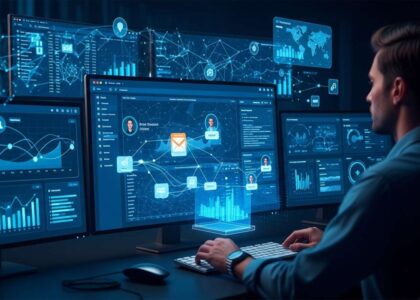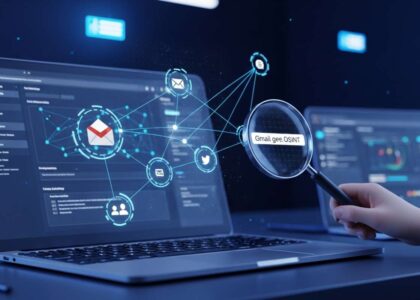
Open Source Intelligence, or OSINT, has become one of the most important tools in modern counter-terrorism. In a world where extremist narratives, recruitment efforts, and operational signals often move through public or semi-public online spaces, OSINT gives analysts a lawful and structured way to observe what adversaries choose to reveal.
It does not replace human judgment, intelligence analysis, law enforcement, or community prevention work. But it does strengthen all of them.
Used responsibly, OSINT helps organizations detect early warning signs, understand threat ecosystems, and support prevention before harm occurs. It is not about spying for the sake of spying. It is about turning open information into insight, and insight into protection.
For government teams, security professionals, researchers, and threat intelligence units, the value is clear. Extremist activity leaves traces. Those traces may appear in propaganda posts, supporter networks, fundraising trails, image metadata, platform migration patterns, or language changes inside public channels. OSINT helps connect those fragments.
For businesses and institutions, the value is just as real. Threats do not remain confined to the battlefield or the state. They affect platforms, supply chains, schools, communities, financial systems, and digital trust.
That is where EINITIAL24 comes in.
Through training, workshops, services, and product development support, EINITIAL24 helps teams build practical OSINT capability with a strong emphasis on legality, ethics, and operational usefulness. The goal is not noise. The goal is structured understanding.
Shadow Play: Why OSINT Works for Counter-Terrorism
Extremist actors often depend on public visibility more than people assume. Even when they use encrypted tools, they still need to attract attention, influence followers, move narratives, raise funds, and coordinate across ecosystems. Those behaviors create patterns.
OSINT works because those patterns are visible.
A single post may not mean much. A repeated slogan may not be enough on its own. But when propaganda appears across channels, when recruitment language spreads through clusters, when accounts link to the same media kits, or when fundraising pages appear shortly after a major event, the picture becomes more meaningful.
This is where careful observation matters more than volume.
The best counter-terrorism OSINT work does not drown analysts in data. It filters, contextualizes, and prioritizes. It asks practical questions.
What is being said?
Who is amplifying it?
Where is it spreading?
What language is changing?
What offline behavior might this online activity support?
Those questions are the backbone of sound OSINT.
Monitor propaganda channels
Extremist groups rarely operate with total silence. They publish statements, videos, images, slogans, and ideological materials intended to recruit, justify, intimidate, or inspire.
Monitoring these channels helps analysts understand the current narrative environment. It reveals which themes are being pushed, which events are being exploited, and which messages are designed to resonate with a specific audience.
Map recruitment networks
Recruitment rarely happens in one jump. It usually grows through soft exposure, reinforcement, private messaging, and gradual social embedding.
OSINT can help map visible recruitment pathways by identifying accounts, communities, reposting behavior, and ideological bridges between broader audiences and more extreme circles.
Uncover supporter communities
Not every supporter is a direct operator. Some amplify. Some rationalize. Some donate. Some simply normalize extremist language.
Supporter communities matter because they create a permission structure. They reduce friction for radical ideas and help messages travel farther than the original source.
Understand ideological messaging
Different groups use different frames. Some emphasize grievance. Some use identity. Some use revenge. Some lean on religious distortion. Others build around nationalism, apocalyptic imagery, or conspiratorial worldviews.
Understanding the messaging helps analysts understand the audience.
Track fundraising activities
Funding is often hidden in plain sight. It may be disguised as humanitarian appeals, merchandise, digital donations, or transfers through third-party networks.
OSINT can identify public fundraising attempts, inconsistent claims, suspicious coordination, and the overlap between seemingly benign campaigns and extremist ecosystems.
Expose operational planning
Not every public signal is propaganda. Some signals reflect logistics, travel, timing, supply gathering, or target rehearsal.
Responsible OSINT looks for combinations of indicators rather than isolated clues. The emphasis is on pattern recognition, not speculation.
Signs and Signals: How Terrorists Use the Internet
The internet is not just a communication tool. For extremist actors, it can also be a stage, a recruitment funnel, a logistics layer, and a morale engine.
Understanding the major online behaviors helps counter-terrorism teams identify risk early.
Propaganda distribution
Propaganda is designed to travel.
It may be reposted across multiple platforms, mirrored in backup channels, or adapted into shorter clips and graphic images. Often it is packaged to survive moderation and keep moving even after removal.
This distribution process matters because it reveals both the message and the resilience of the network carrying it.
Recruitment
Recruitment online is often indirect.
An initial encounter may be a meme, a video, a political rant, or an emotional appeal. The audience may then be nudged into smaller groups, private chats, or more ideological material.
This gradual funnel is one reason OSINT is so valuable. It allows analysts to observe the public edge of a much deeper process.
Coordination
Some online activity is simply expressive. Some is organizational.
Coordination may appear as synchronized posting, shared file links, repeat instructions, event promotion, time-based messaging, or coordinated amplification. It can also appear through coded language, routine participation patterns, and overlapping admin behavior.
Fundraising
Extremist fundraising can be surprisingly adaptive.
Actors may shift between donation pages, payment apps, cryptocurrencies, merchandise sales, and proxy handlers. They may exploit sympathetic causes or use vague language to obscure intent.
OSINT does not replace financial investigation, but it can surface indicators that merit review.
Dark Secrets: How Counter-Terrorism OSINT Happens
Good OSINT is disciplined, not dramatic.
It depends on collection, triage, context, validation, and reporting. It also depends on knowing what not to do. Analysts should not overread weak signals, and they should not confuse rumor with evidence.
Monitoring propaganda
Monitoring propaganda is less about endless scrolling and more about structured capture.
Teams typically look at content themes, release cadence, language shifts, visual symbols, and network behavior around distribution. They also note when new media style guides appear, when format changes occur, or when old narratives return in a new form.
A propaganda channel is not just a voice. It is a signal system.
A change in tone can matter. A change in production quality can matter. A change in audience targeting can matter.
Tracking radicalisation
Radicalization is not a single event. It is a process.
Online behavior can suggest movement toward harder ideological positions, but responsible analysis must avoid pretending that every angry or isolated person is a threat. The real work is to identify clusters of concern, repeated exposure, escalating language, and observable behavioral drift.
This is especially important for prevention teams. The goal is not to stigmatize beliefs. The goal is to recognize patterns of violent intent or enabling behavior before harm occurs.
Mapping networks
Network mapping helps show relationships that are hard to see in raw message streams.
Who amplifies whom?
Which accounts act as bridges?
Which groups share language, media, or timing?
Which nodes appear central, and which are merely local echoes?
The answer is often more useful than the content alone.
A well-built network map can reveal that a small number of highly active accounts shape the tone of a much larger audience. It can also show where a network is fragile, where it is redundant, and where it is simply drifting.
OSINT and “lone wolf” terrorism
The term “lone wolf” can be misleading. Many so-called lone actors are not truly isolated. They may consume online propaganda, follow public channels, absorb ideological cues, and build fantasies inside digital echo chambers even if they never join a formal group.
OSINT matters here because the path to violence can be highly public until the final stage. That does not mean every isolated person is dangerous. It means online precursors deserve careful, lawful scrutiny.
The best practice is to look for convergence.
That means comparing online content, timing, language, access, behavior, and real-world context. One clue is not enough. Convergence is what turns suspicion into meaningful assessment.
Pitfalls in the Dark: Challenges in Counter-Terrorism OSINT
This work is necessary, but it is not easy.
Counter-terrorism OSINT faces a constant set of technical, legal, and analytical challenges. Good teams anticipate these problems instead of pretending they do not exist.
Encrypted platforms
A major portion of extremist communication may move into encrypted or closed environments.
That limits visibility and can create an illusion of disappearance. In reality, the activity often just shifts. Public signals may get thinner while the network becomes more selective.
This is why OSINT teams must learn to watch the edges of ecosystems, not just the center.
Disinformation
Extremist spaces often contain deliberate deception.
False claims, manipulated media, fake leak culture, and staged content can be used to confuse investigators and divide audiences. Some actors spread misleading information simply to provoke reaction or waste analyst time.
This is where verification discipline matters.
A single screenshot is not proof. A repost is not always endorsement. A viral claim is not automatically credible. Analysts need corroboration across time and source types.
Platform migration
When a platform tightens moderation, extremist actors often migrate.
They may move to smaller apps, niche forums, backup channels, or new branding. They may also fragment into multiple smaller communities to reduce visibility.
Tracking that migration is one of the harder tasks in OSINT. It requires continuity, patience, and awareness of how online communities reconstitute themselves after disruption.
Legal and ethical constraints
This is where professionalism is non-negotiable.
Counter-terrorism OSINT must respect privacy rules, proportionality, access limitations, and the boundaries of lawful collection. It also needs strong internal governance.
The objective is not to collect everything.
The objective is to collect what is relevant, justify why it matters, and keep the process defensible.
Ethics matters because the work touches real people, not just data points. Analysts must reduce harm, avoid bias, and separate suspicion from proof.
What Makes Strong Counter-Terrorism OSINT Different
The difference between weak and strong OSINT is not the number of tools. It is the quality of the method.
Strong OSINT is systematic. It is repeatable. It can be audited. It separates observation from interpretation. It records confidence levels. It uses context instead of guessing.
It also understands the difference between tactical curiosity and strategic intelligence.
Tactical curiosity asks, “What is this account saying right now?”
Strategic intelligence asks, “What does this pattern mean across time, platforms, audiences, and operational risk?”
That broader view is what organizations need.
At EINITIAL24, this distinction is central to our training and workshops. We help teams move beyond ad hoc monitoring and into structured intelligence work. That includes collection frameworks, analyst workflows, threat triage, evidence handling, reporting templates, and practical use-case design.
The Role of Technology in Counter-Terrorism OSINT
Technology can strengthen OSINT, but it cannot replace analysis.
Automated tools can help surface keywords, cluster content, identify repeated media, detect anomalies, and support trend analysis. They can also reduce manual burden and improve coverage.
But automation has limits.
It can miss nuance. It can misclassify sarcasm, coded language, or reclaimed symbols. It can also flood teams with false positives if not tuned correctly.
That is why human review remains essential.
A strong program combines technology with disciplined analyst review. The machine finds the signal candidate. The analyst decides whether it matters.
This balance is one reason many organizations seek product development support from EINITIAL24. We help conceptualize tools that are not merely technically impressive, but operationally useful. That means clear workflows, explainable outputs, and practical outputs that support decision-making.
Building a Counter-Terrorism OSINT Program That Works
A useful OSINT program is not built around panic. It is built around process.
First, define the mission.
Is the goal early warning, narrative monitoring, network analysis, fundraising detection, or support to investigations?
Second, define the legal basis and governance.
What may be collected? What may be stored? Who may access it? How long may it be retained?
Third, define the sources.
Public platforms, media outlets, forums, archives, image repositories, domain records, shipping records, procurement data, and other open sources may all be relevant depending on the mission.
Fourth, define the analytic products.
Do you need daily situational awareness, weekly threat summaries, network diagrams, or case-based reporting?
Fifth, define escalation criteria.
Which patterns are informative, and which require immediate escalation?
This structure keeps the program focused and protects it from becoming a noisy content-tracking exercise.
Why Training Matters
Many organizations know they need OSINT. Fewer know how to do it well.
Without training, teams often struggle with inconsistent collection, weak documentation, poor source evaluation, and overconfidence in unverified indicators. They may also lack the confidence to explain their findings to legal, executive, or operational stakeholders.
That is where training becomes a force multiplier.
EINITIAL24 offers training that is practical, scenario-driven, and grounded in real-world workflow design. The focus is not theory alone. It is capability building.
Our workshops help teams learn how to identify extremist indicators, structure a monitoring plan, document findings professionally, and produce intelligence that supports action.
We also help teams understand boundaries. In counter-terrorism work, knowing what not to do is as important as knowing what to collect.
How Workshops Create Real Operational Value
Workshops are where abstract methods become usable habits.
A good workshop gives participants enough structure to do useful work on day one. It should include threat framing, source selection, validation methods, confidence assessment, case study analysis, and reporting discipline.
It should also encourage critical thinking.
What makes an online signal meaningful?
What creates false confidence?
How do we test assumptions?
How do we distinguish coordinated behavior from coincidence?
These questions improve quality and reduce risk.
For organizations building internal capacity, EINITIAL24 workshops are designed to support exactly that kind of improvement. They are practical, collaborative, and aligned with real operational needs.
Product Development for Modern OSINT Teams
Off-the-shelf tools do not always fit the mission.
Some teams need custom dashboards. Some need better triage pipelines. Some need reporting templates. Some need alert logic that matches their environment. Others need knowledge management systems that preserve analyst reasoning.
Product development can close those gaps.
At EINITIAL24, we support the development of OSINT solutions that reflect actual field demands. That may include internal workflow tools, collection trackers, alerting logic, analytic templates, or user-centered interfaces for threat monitoring.
The best products do not just display data.
They help people make decisions.
Counter-Narratives and Prevention
Counter-terrorism is not only about detection. It is also about resilience.
One of the most important ways OSINT helps is by showing which narratives are gaining traction and which messages are being used to manipulate vulnerable audiences.
That insight supports counter-narrative work.
A counter-narrative is not just a rebuttal. It is a credible alternative that reduces the appeal of violent ideology. It may come from community leaders, educators, trusted local voices, survivors, researchers, or institutions that understand the target audience.
OSINT helps identify what kind of message is likely to land.
The challenge is not simply to push back. It is to communicate with precision, empathy, and legitimacy.
Ethical Use Is Non-Negotiable
The more powerful the OSINT capability, the more important the ethics.
Counter-terrorism work can easily drift into overreach if teams are not careful. That is why clear policy, oversight, and training are essential.
Ethical OSINT respects privacy, minimizes unnecessary collection, avoids profiling, and maintains accountability. It also recognizes that open information is still personal information in many cases.
A strong program protects both security and civil liberties.
That balance is not a weakness. It is a sign of maturity.
Want to See Counter-Terrorism OSINT in Action?
Real-world examples are where theory becomes concrete.
A propaganda wave may reveal a new messaging shift.
A cluster of accounts may show a recruitment funnel.
A sudden change in language may suggest operational urgency.
A donation pattern may connect visible supporters to a broader network.
A migration from one platform to another may expose a resilience strategy after moderation pressure.
These are the kinds of patterns that experienced analysts learn to recognize. They are also the kinds of patterns that organizations can learn to track with the right process, the right tools, and the right training.
EINITIAL24 helps teams turn these ideas into working capability. Whether your need is awareness building, workshop delivery, custom product development, or end-to-end OSINT support, our approach is designed to be practical, modern, and disciplined.
FAQs About Counter-Terrorism OSINT
What are the 4 P’s of counter terrorism?
Different organizations use different frameworks, but the “4 P’s” often refer to prevention, protection, preparedness, and pursuit. Some models vary by country or agency, so it is important to use the version relevant to your operational context.
What are the 5 strategies of terrorism?
There is no single universal list, but common strategic aims include coercion, intimidation, provocation, radicalization, and disruption. Terrorist groups may combine these goals depending on audience and opportunity.
What are examples of counter-terrorism?
Examples include intelligence analysis, border security, community prevention programs, financial disruption, online monitoring, law enforcement investigations, critical infrastructure protection, and strategic communications.
What new narratives are appearing in propaganda channels?
New narratives often reflect current events, political conflict, local grievances, identity themes, or attempts to reframe group losses as victories. The exact pattern changes quickly, which is why current monitoring matters.
Which platforms are seeing an increase in extremist activity?
This changes over time and by region. Extremist activity often shifts toward platforms with weaker moderation, better anonymity, or stronger group features. Analysts should monitor migration patterns rather than assume any one platform is permanent.
What are the key indicators of a “lone actor” becoming radicalized online?
Common indicators may include escalating ideological language, repeated engagement with extremist material, social withdrawal into narrow online communities, fixation on grievance, and signs of intent or rehearsal. No single sign is sufficient on its own.
Who are the key influencers spreading extremist ideology within specific geographical regions?
That depends on the region, language, and network. The right approach is to map the local influence ecosystem, identify amplifiers, and assess which accounts connect audience segments to more extreme content.
Are there digital traces indicating logistical planning for an attack?
Sometimes there are, but they are rarely obvious in isolation. Analysts look for combinations of timing, travel-related mentions, supply indicators, location exposure, communications changes, and unusual coordination.
Can we map the communication network of a specific extremist group?
Yes, at a high level and within legal and ethical boundaries. Network mapping can reveal clusters, bridges, central nodes, and distribution paths. It should always be done carefully and defensibly.
Has an extremist group released a new, updated media guide?
That is the kind of question OSINT can help answer through ongoing monitoring of public channels, media repositories, and mirrored content. Changes in media style can also indicate strategic adaptation.
What are the geo-location signals embedded in posted images or videos?
Potential signals may include landmarks, signage, environmental features, weather patterns, language cues, shadow direction, timestamps, and metadata when available. These should always be corroborated rather than assumed.
Are there links between crowdfunding efforts and sanctioned terrorist organizations?
Sometimes public fundraising efforts overlap with suspicious networks, proxy organizers, or shell narratives. Any such link requires careful validation and legal review.
Is cryptocurrency being used in digital wallets associated with extremist activities?
In some cases, yes. Crypto can be used because of speed, reach, and perceived anonymity. But attribution is difficult and must be handled with strong evidentiary standards.
What corporate, legal, or shipping records show connections to high-risk actors?
Public records can sometimes expose shared addresses, shell entities, unusual procurement patterns, or logistics inconsistencies. These signals are best treated as leads, not conclusions.
How do we differentiate between legitimate religious/political discourse and violent extremist content?
Context is critical. Legitimate discourse may be provocative or controversial, but violent extremist content usually contains endorsement of violence, mobilization, glorification of attacks, or explicit support for harm. Analysts should avoid conflating belief with violence.
What are the most effective automated tools for identifying terrorist content on tech platforms?
The best tools depend on the use case. Effective systems usually combine keyword detection, image matching, network analysis, anomaly detection, and analyst review. Human oversight remains essential.
Are OSINT collection methods violating privacy regulations such as GDPR?
They can, if poorly designed. A lawful program should have a clear purpose, lawful basis, data minimization, retention rules, access controls, and review procedures. Legal counsel should always guide implementation.
Have recent “decapitation” strategies disrupted the network?
Sometimes leadership removal disrupts coordination, but resilient networks can fragment, rebrand, or decentralize. Disruption effects vary and should be assessed empirically.
What is the impact of removing extremist content online?
Removal can reduce reach, but it can also drive migration, martyr narratives, or hidden sharing. Content removal is most effective when paired with broader disruption and prevention strategies.
Which communication channels are most effective for spreading counter-narratives?
The best channel is usually the one trusted by the intended audience. That may be community platforms, local influencers, educational institutions, trusted media, or private prevention networks. Message credibility matters more than volume.
Closing Thought
Counter-terrorism OSINT is not about fear. It is about awareness, discipline, and prevention.
It helps organizations see patterns earlier, understand threats more clearly, and respond with greater precision. It also demands maturity, because the work touches both security and rights.
When done well, OSINT gives decision-makers a sharper view of the environment without abandoning ethics or legality.
That is the standard EINITIAL24 supports.
If your organization needs training, workshops, services, or product development support in counter-terrorism OSINT, EINITIAL24 can help build capability that is practical, modern, and operationally grounded.
The online world leaves traces. The real question is whether your team is ready to read them.