Microsoft 365 (formerly Office 365) has become the backbone of communication for millions of businesses worldwide. Whether you are a small startup, a mid-sized company, or an enterprise operating across continents, chances are that your team uses Outlook and Exchange Online as the primary email platform.
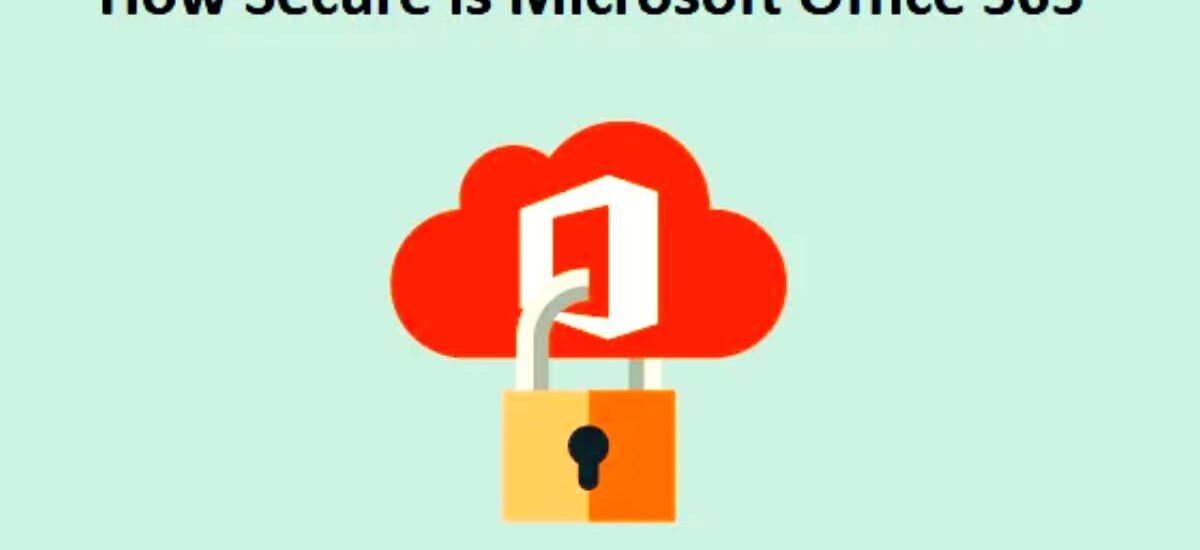
With email remaining one of the most common attack vectors for cyber-criminals, the question becomes unavoidable: Is Microsoft 365 email secure to use?
The answer is more layered than a simple yes or no.
Microsoft 365 certainly provides an extensive security architecture, but its actual effectiveness depends on configuration, awareness, and complementary tools. Many organizations assume M365 is fully secure “out of the box,” but that is a misconception. Security must be activated, optimized, monitored, and enhanced to reach its full potential.
This blog breaks down everything you need to know—from the causes of vulnerability to the built-in protections, optional enhancements, and external solutions that improve your overall email security posture. Every concept is explained in short, digestible paragraphs and in a humanized tone to make it easier for any reader to understand.
Is Microsoft 365 Email Secure to Use?
The straightforward answer is that Microsoft 365 email is secure—provided that organizations configure and manage it correctly.
Microsoft invests billions of dollars annually into its cloud security stack, and its email infrastructure benefits directly from enterprise-grade safeguards. This includes encryption, access controls, AI-powered threat detection, spam filters, and compliance tools.
However, security is not a one-size-fits-all scenario. While Microsoft 365 provides advanced capabilities, many security features are not enabled by default. Additionally, misconfiguration and human errors remain significant risk factors.
So yes, Microsoft 365 email can be highly secure—but only when its features are implemented and monitored consistently. Organizations that ignore security best practices or assume Microsoft handles everything on their behalf may encounter vulnerabilities.
What Counts as the Cause of Vulnerability for Microsoft 365 Email?
Even with Microsoft’s robust architecture, vulnerabilities can arise from several sources. Understanding these causes helps organizations strengthen their defenses.
1. Misconfiguration of Security Features
One of the most common reasons systems become vulnerable is that administrators overlook essential security settings. Many organizations:
- Leave multi-factor authentication turned off
- Do not enforce strong password policies
- Fail to configure data loss prevention
- Skip configuring conditional access policies
- Rely solely on default spam and malware filters
A misconfigured cloud environment becomes an easy target for attackers.
2. Human Error
Employees unintentionally expose systems to threats by:
- Clicking phishing links
- Responding to fraudulent emails
- Sending sensitive data to the wrong recipient
- Weakly securing their devices
Even the best platforms cannot protect against every human mistake without training and technical controls.
3. Credential Theft
Attackers often attempt to steal Microsoft 365 account credentials via phishing, keylogging, or brute-force attacks. Once they gain access, they can infiltrate inboxes, impersonate users, exfiltrate data, or launch Business Email Compromise (BEC) attacks.
4. Insider Threats
Not all threats come from outside the organization. Employees with access to sensitive information can misuse their privileges intentionally or accidentally. Microsoft 365 allows granular access control, but improper permission management increases these risks.
5. Legacy Authentication
Legacy authentication protocols do not support MFA and are easy for attackers to bypass. If businesses do not disable legacy authentication in Microsoft 365, they leave a doorway open for exploitation.
6. Third-Party Integrations
Every connected app, plugin, and extension provides an additional entry point. Poorly secured apps can compromise the security of the entire Microsoft 365 ecosystem.
7. Lack of Monitoring or Incident Response
Without audit logs, alerts, or active monitoring, suspicious activities often go undetected. Microsoft 365 logs must be enabled and reviewed consistently for maximum effectiveness.
Importance of Microsoft 365 Email Security
Securing Microsoft 365 email is not optional—it’s essential. Email is the channel where:
- Malware enters the system
- Sensitive documents are shared
- Hackers attempt phishing attacks
- Business-critical communication takes place
- Privileged login credentials are stolen
A single compromised mailbox can expose financial data, customer information, confidential internal discussions, and intellectual property. The consequences extend beyond reputational damage—they can include legal penalties, operational shutdowns, and significant financial losses.
Organizations that use Microsoft 365 must view email security as a strategic priority rather than a simple configuration task. Strong email security protects your business ecosystem, your clients, and your long-term business reputation.
What Microsoft 365 Offers for the Security of Emails?
Microsoft 365 provides a rich ecosystem of security features designed to protect email communication. While not all features are active by default, they become highly effective when configured properly.
Let’s break down the major categories of security within Microsoft 365 email.
Comprehensive Security Architecture
Microsoft 365’s email platform is built on a multi-layered cloud security architecture. This includes:
1. Zero-Trust Framework
Microsoft uses a zero-trust model for cloud security:
Never trust, always verify.
This means every request—whether internal or external—is authenticated, authorized, and evaluated based on risk.
2. Advanced Threat Protection (ATP)
Now known as Defender for Office 365, ATP provides:
- Safe Links (rewrites URLs to block phishing sites)
- Safe Attachments (scans attachments before delivery)
- Anti-phishing intelligence
- AI-driven threat detection
- Real-time alerts and reporting
This dramatically reduces the likelihood of malware or phishing attacks entering user inboxes.
3. Anti-Spam and Anti-Malware Protection
Microsoft 365 uses:
- Machine learning
- Reputation scoring
- Global threat intelligence
…to block spam, malicious attachments, and suspicious email content.
4. Conditional Access Policies
Conditional access allows organizations to define the exact conditions under which an account can access email. Policies can be based on location, device type, user role, or risk level.
This ensures unauthorized access gets blocked automatically.
Data Encryption Mechanisms
Encryption is one of the strongest lines of defense in Microsoft 365.
1. Encryption at Rest
Emails stored on Microsoft servers are encrypted to ensure data remains protected even if physical security is compromised.
2. Encryption in Transit
Messages sent between Microsoft servers and client devices use TLS (Transport Layer Security) to prevent interception during transmission.
3. BitLocker Encryption
BitLocker adds automated encryption on storage disks within Microsoft data centers, adding another layer of protection.
Message Encryption
Microsoft 365 Message Encryption (OME) allows the sender to protect sensitive messages with encryption that applies even when the recipient uses a different mail system.
Recipients can open encrypted messages using:
- One-time passcodes
- Microsoft accounts
- Gmail authentication
This ensures secure communication across platforms without requiring the recipient to install special software.
Users can:
- Prevent forwarding
- Control copying and printing
- Set message expiration
- Revoke email access
This gives organizations significant control over sensitive communication.
Multi-Factor Authentication (MFA)
Among all Microsoft 365 security features, MFA is the single most important and effective for preventing unauthorized access.
MFA requires users to verify their identity with at least two methods:
- Password
- Mobile app approval
- Hardware tokens
- SMS codes
According to security studies, MFA alone can stop over 99% of credential-based attacks.
However, many businesses still do not enforce it—leaving accounts vulnerable.
Microsoft recommends enabling:
- Standard MFA for all users
- Conditional access-based MFA for high-risk scenarios
- Passwordless authentication where possible
This drastically reduces the threat of account takeover.
Data Loss Prevention (DLP)
DLP is a powerful Microsoft 365 tool that prevents sensitive information from leaving the organization.
DLP lets you:
- Detect financial data, personal information, and confidential content
- Automatically block risky actions
- Warn users before sending harmful messages
- Monitor data sharing internally and externally
- Prevent accidental exposure of critical documents
Common DLP uses include blocking the transmission of:
- Credit card numbers
- Banking information
- Health records
- Government ID numbers
- Sensitive intellectual property
DLP policies help organizations maintain compliance with regulations and prevent data breaches.
Is Microsoft 365 Email Secure to Use – Options to Ensure Security
While Microsoft 365 has excellent built-in protections, organizations can maximize security by applying additional measures. These actions help ensure that your email environment stays resilient even against sophisticated cyber-attacks.
1. Enable MFA Everywhere
No user—including admins—should be allowed to access their Microsoft 365 account without MFA. This reduces compromise dramatically.
2. Activate Defender for Office 365
This provides:
- Anti-phishing
- Anti-malware
- Sandbox analysis
- Real-time threat analytics
- Automated investigation and response
Without Defender, many advanced threats remain undetected.
3. Disable Legacy Authentication
Legacy protocols such as IMAP and POP3 undermine modern security features. Disabling them closes major security gaps.
4. Implement Conditional Access
Define rules that specify:
- Which users can sign in
- Which devices are allowed
- Which locations are trusted
- What risk levels require MFA
Conditional access ensures that compromised users cannot cause damage.
5. Use Secure Score
Microsoft Secure Score evaluates your email and overall account security posture and provides step-by-step recommendations to enhance it.
6. Train Employees on Phishing Prevention
Technical controls are not enough. Training users reduces the success rate of phishing attempts significantly.
7. Configure DLP and Information Protection Labels
Protect sensitive information by applying labels such as:
- Confidential
- Internal
- Restricted
This helps automate enforcement of data-handling policies.
8. Enable Audit Logging and Alerts
Logs give visibility into suspicious activities and should always be enabled.
9. Regularly Review Admin Privileges
Less privileged access reduces risk. Remove inactive accounts and unnecessary global admin permissions.
10. Use Backup Solutions for Microsoft 365
Microsoft provides redundancy—but not long-term backups. Dedicated backup software ensures you retain access to emails, contacts, and OneDrive/SharePoint data even after accidental deletion or ransomware incidents.
Best Way to Deal – Is Microsoft 365 Email Secure to Use?
The best way to ensure Microsoft 365 email remains secure is to combine:
- Microsoft’s built-in protections
- Proper configuration and maintenance
- User training
- External backup and security tools
Microsoft provides excellent infrastructure, but your organization must reinforce it with strategic planning and proactive security management.
This includes:
- Reviewing security settings regularly
- Monitoring user behavior
- Performing security audits
- Using advanced email filtering
- Implementing automated incident response tools
Organizations that follow these strategies achieve a level of email security that is suitable for even the most sensitive industries.
Quick Working Guide of the Software to Tackle Email Security Risks
If you are using a third-party email security or backup solution (many businesses do), here is a general step-by-step approach to ensure full protection of your Microsoft 365 environment.
Step 1: Connect Microsoft 365 Account
Most security tools require:
- Admin credentials
- Permission authorization
- API integration
This ensures the software can scan, monitor, and protect your email data.
Step 2: Configure Threat Detection
Enable features such as:
- Malware scanning
- Phishing protection
- URL scanning
- Attachment sandboxing
These ensure attacks get detected before they reach inboxes.
Step 3: Set Up Data Backup
Backup tools allow you to:
- Automatically back up emails, OneDrive, and SharePoint
- Restore deleted or corrupted emails
- Retain data long-term even after user removal
This ensures compliance and business continuity.
Step 4: Apply DLP and Compliance Policies
Use built-in or external tools to:
- Prevent sensitive data leakage
- Enforce data governance
- Maintain industry compliance
Policies can track and block risky email transmissions.
Step 5: Monitor and Review Reports
Most solutions provide:
- Threat detection reports
- Phishing trends
- User risk scoring
- Log activity
Regular reviews allow quick responses to suspicious behavior.
Step 6: Automate Incident Response
Automated workflows can:
- Quarantine suspicious emails
- Notify security admins
- Block malicious IP addresses
- Force password resets
Automation is essential for reducing response time.
Step 7: Train Users
Email security becomes stronger when users are:
- Aware of phishing tactics
- Able to identify suspicious messages
- Trained regularly through simulations
User behavior is the strongest defense when combined with technology.
Conclusion
So, is Microsoft 365 email secure to use?
Yes—Microsoft 365 is a highly secure platform, but only when configured, optimized, and managed properly.
Microsoft provides a powerful security architecture, but organizations must take active steps to:
- Enable advanced features
- Enforce authentication policies
- Protect sensitive data with DLP
- Train employees
- Use dedicated backup solutions
- Monitor the environment continuously
Email remains the most targeted communication channel for cyber-attacks, but with the right strategy, Microsoft 365 can deliver strong, enterprise-grade protection for businesses of any size.