In today’s hyper-connected world, Facebook is more than just a social networking platform — it’s a massive repository of publicly available information. For investigators, cybersecurity professionals, journalists, and even businesses, Facebook has become a powerful source of Open Source Intelligence (OSINT). When used correctly and ethically, it can reveal connections, behaviors, and even contact details like emails and phone numbers.
What are OSINT and SOCMINT?
OSINT (Open Source Intelligence) refers to collecting and analyzing publicly available information. This could include websites, public records, forums, and social media platforms.
SOCMINT (Social Media Intelligence) is a subset of OSINT that focuses specifically on social platforms like Facebook, Instagram, and Twitter. It dives deeper into user behavior, interactions, and digital footprints.
Facebook, due to its scale and user activity, is one of the richest SOCMINT sources available today.
Status Update: How Does Facebook Work?
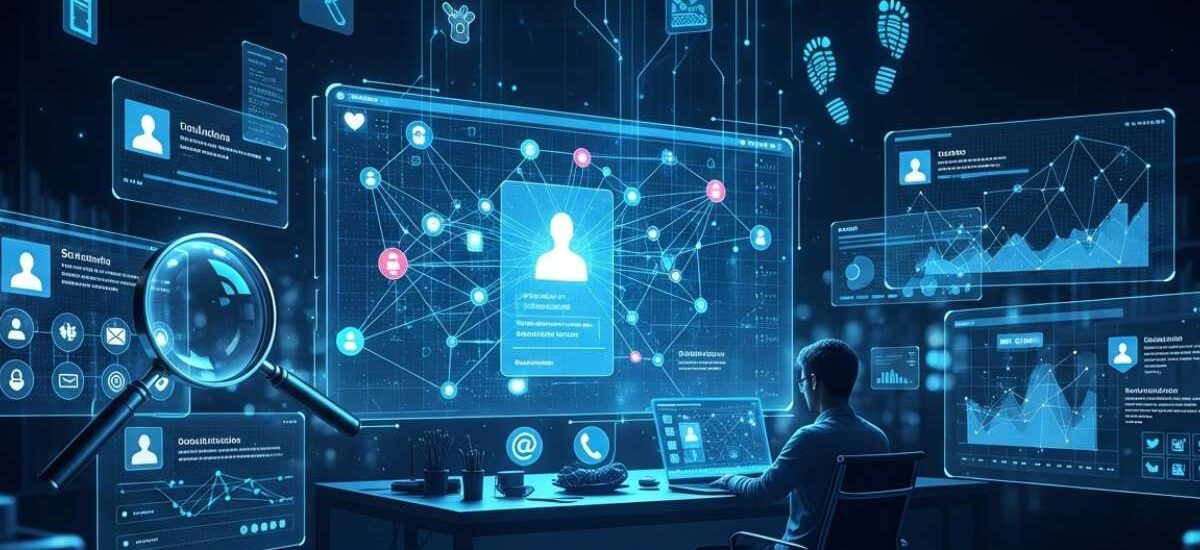
At its core, Facebook operates as a social graph — a network of users connected through friendships, groups, likes, and interactions. Every action — posting, liking, commenting, tagging — adds another layer to a user’s digital identity.
From an OSINT perspective, this means:
- Every profile is a node
- Every interaction is a link
- Every piece of public data is a clue
Understanding this structure is essential for effective investigation.
Privacy Controls & Public Data
Facebook provides users with privacy settings, but not everyone configures them properly. As a result, a surprising amount of data remains public.
Publicly accessible data may include:
- Profile name and photo
- Friends list (sometimes partially visible)
- Posts and comments
- Group memberships
- Marketplace listings
- Check-ins and tagged locations
Even when profiles are locked down, indirect data (like comments on public posts or tagged photos) can still expose valuable information.
Profiles & Connections
A Facebook profile is rarely isolated. It is part of a broader network of:
- Friends
- Family members
- Colleagues
- Group members
By analyzing these connections, you can uncover:
- Real identities behind fake profiles
- Hidden relationships
- Shared interests and affiliations
Mapping connections is often more revealing than analyzing a single profile.
Facebook Groups & Community Interactions
Groups are goldmines for OSINT. Many users behave more openly in niche communities.
Inside groups, you may find:
- Personal opinions and beliefs
- Contact details shared casually
- Business promotions
- Repeated interaction patterns
Public groups are especially useful because their content is often indexed by search engines.
Meta Commentary: Why OSINT on Facebook?
Facebook OSINT is valuable because:
- It combines identity, behavior, and communication
- It provides both direct and indirect intelligence
- It enables pattern recognition over time
For businesses, it helps in lead generation and fraud detection. For investigators, it aids in identity verification. For cybersecurity professionals, it highlights vulnerabilities in personal data exposure.
Facebook OSINT: Three Key Approaches
1. Discovery
Finding the target profile or identity.
2. Extraction
Pulling relevant data such as emails, phone numbers, or connections.
3. Analysis
Interpreting patterns, behaviors, and relationships.
Each stage builds upon the previous one.
Find Facebook User Details with OSINT
To find a Facebook user, you can try:
Search Engine Dorking
Using advanced search queries like:
- Name + location
- Username variations
- Site-specific searches (e.g., site:facebook.com)
This helps uncover profiles not easily visible within Facebook itself.
Facebook Search & Advanced Filters
Facebook’s internal search allows filtering by:
- Location
- Workplace
- Education
- Mutual connections
This narrows down results significantly.
Investigating Mutual Friends & Tagged Photos
Even if a profile is private:
- Mutual friends may reveal identity
- Tagged photos may expose the person indirectly
To find details from a Facebook user, you can try:
Checking Public Profiles
Look at:
- Bio/About section
- Work and education history
- Public posts
Sometimes users unknowingly share sensitive details.
Graph Search Alternatives
Although Facebook removed its original Graph Search, similar insights can be recreated using:
- Search operators
- Third-party tools
- Manual filtering
Monitoring Facebook Marketplace
Marketplace listings often reveal:
- Contact details
- Location
- Behavioral patterns
Check-Ins
Location tags and check-ins can reveal:
- Daily routines
- Frequent places
- Travel patterns
OSINT Tools like OSINTCrawler
Specialized tools can automate:
- Data aggregation
- Pattern detection
- Profile analysis
These tools save time and improve accuracy.
Find Facebook Phone Numbers with OSINT
To find a phone number from a Facebook account, you can try:
Phone Number Lookup
Some users link their phone numbers for account recovery, which may appear in:
- Public posts
- Business pages
Facebook Marketplace & Ads
Sellers often include phone numbers for quicker communication.
Dorking for Phone Numbers
Search queries can reveal:
- Phone numbers embedded in posts
- Contact details in public listings
Find Facebook Email Addresses with OSINT
To find an email address from a Facebook account, you can try:
‘About’ Sections & Business Pages
Many professionals and businesses list emails publicly.
Checking Group Posts & Discussions
Users sometimes share emails for:
- Freelance work
- Collaboration
- Sales
Using OSINT Tools for Reverse Email Lookups
These tools help:
- Match emails to profiles
- Discover linked accounts
What About OSINT on Facebook Marketplace?
Marketplace is a highly underrated OSINT source.
While conducting OSINT on Facebook Marketplace, look out for:
User Information
- Full or partial name
- Profile picture authenticity
- Profile link
- Other listings
- Account age
- Location
Listing Details
- Product descriptions
- Pricing patterns
- Item conditions
- Tags and categories
These can reveal financial behavior and personal habits.
Location & Behavioral Data
- Frequent selling locations
- Travel patterns
- Consistent posting areas
This is crucial for GeoINT (Geospatial Intelligence).
Communication & Facebook OSINT
- Response times
- Language patterns
- Negotiation styles
These help in behavioral profiling.
Technical & Hidden Data
- Image metadata (EXIF)
- Listing IDs
- Tracking pixels
Advanced users can extract deeper insights from these.
Legal & Ethical Considerations in Facebook OSINT
OSINT must always be conducted responsibly.
Key principles:
- Only use publicly available data
- Do not bypass privacy controls
- Respect platform Terms of Service
- Avoid harassment or misuse of data
Ethics are not optional — they are foundational.
FAQs About OSINT on Facebook
What is OSINT in social media?
It’s the process of collecting publicly available data from platforms like Facebook for analysis.
What information is public on profiles?
Names, photos, posts, group memberships, and sometimes contact details.
How do privacy settings affect visibility?
They determine what data is accessible to others. Poor settings increase exposure.
Personal data vs public metadata?
Personal data is user-provided content; metadata includes timestamps, locations, and interaction patterns.
How can users check their public data?
By viewing their profile as a public user.
Ethical guidelines?
Use data responsibly, avoid harm, and follow legal frameworks.
Platform Terms of Service?
They define what data collection methods are allowed.
Digital footprints?
They are traces of user activity that build an online identity.
Protecting accounts?
Use strong passwords, enable 2FA, and limit public data.
What is a Profile ID?
A unique identifier assigned to each user account.
Location tagging?
It allows users to attach geographic data to posts.
Public group visibility?
Group memberships may reveal interests and affiliations.
Reverse image searching?
Used to verify authenticity of profile pictures.
Risks of browser extensions?
Some may collect or leak sensitive data.
Role of Likes and interactions?
They help build behavioral profiles.
Page Transparency?
Shows details about page ownership and history.
Managing post visibility?
Users can adjust audience settings for each post.
Importance of strong passwords?
Prevents unauthorized access.
Archived data requests?
Users can download their Facebook data.
Why verify information?
To avoid misinformation and false conclusions.
Final Thoughts: Turning Intelligence into Action
Facebook OSINT is not just about gathering information — it’s about connecting the dots. A single data point might seem insignificant, but when combined with others, it can reveal a complete narrative.
However, the real power lies in how you use this information — ethically, legally, and strategically.
Learn OSINT the Right Way with EINITIAL24
If you’re serious about mastering OSINT, cybersecurity, and digital investigations, EINITIAL24 provides industry-focused training, advanced tools, and real-world project experience.
With EINITIAL24, you can:
- Learn professional OSINT methodologies
- Get hands-on experience with real tools
- Build skills in cyber intelligence and digital forensics
- Access custom-developed solutions for investigations and analytics
Beyond training, EINITIAL24 also delivers:
- Cybersecurity services
- OSINT-based investigations
- Custom product development for intelligence workflows
Whether you’re a student, professional, or organization, EINITIAL24 equips you with the expertise needed to navigate and leverage the digital intelligence landscape effectively.
Conclusion
Facebook is more than a social platform — it’s an intelligence ecosystem. With the right techniques, tools, and ethical mindset, OSINT on Facebook can uncover powerful insights.